
Walk into almost any school staff meeting and you’ll hear both terms tossed around like they mean the same thing. Someone mentions “our RTI process,” someone else calls it “the MTSS framework,” and everyone nods along as if there’s no difference at all. Most of the time, nobody stops to ask whether that’s actually true.
It isn’t, not entirely. The two overlap heavily, and in casual conversation, mixing them up rarely causes a problem. But when it comes to actually building a schedule, assigning staff, and deciding who’s responsible for what, the difference starts to matter a lot more than a vocabulary technicality. This article breaks down what each term actually means, where the two overlap, where they diverge, and why getting this right affects how a school organizes its entire support system, not just its reading groups.
What Is RTI?
Response to Intervention, usually shortened to RTI, is a tiered framework focused specifically on academics. The core idea is straightforward: give every student high-quality instruction, watch how they respond, and provide extra support to the ones who need it, in increasing levels of intensity.
The Three RTI Tiers
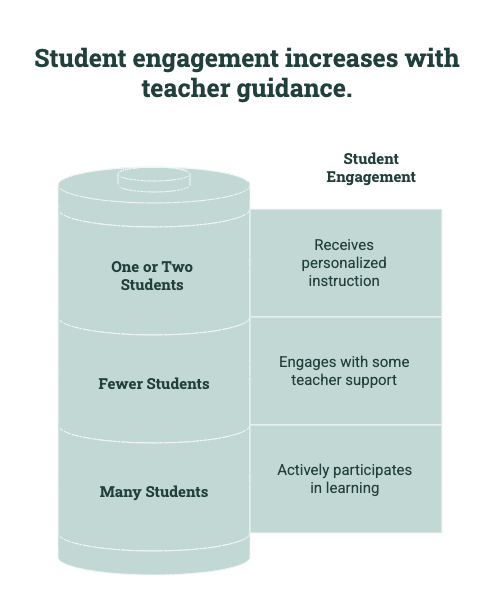
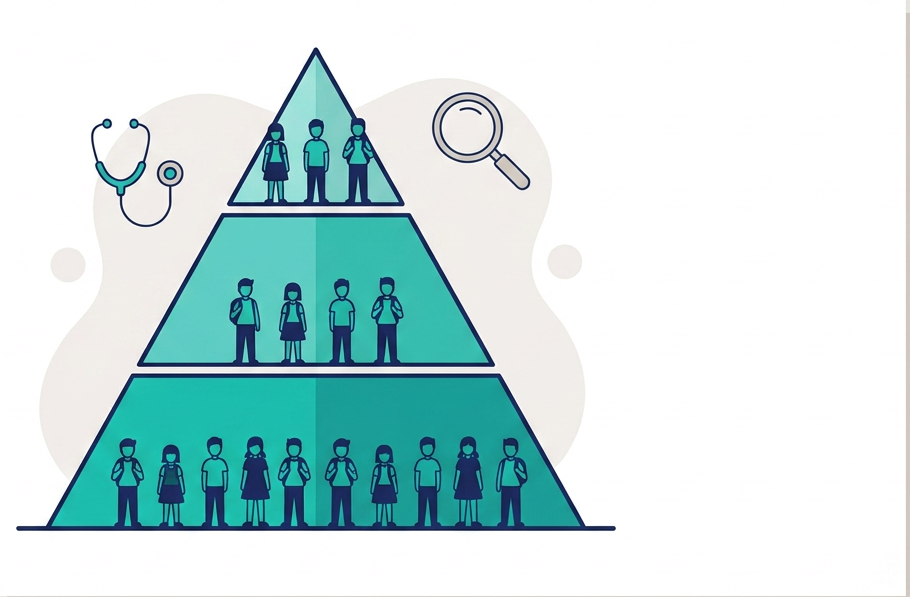
RTI is typically organized into three tiers:
- Tier 1 is core classroom instruction that every student receives. The expectation is that roughly 80 percent of students should succeed with Tier 1 instruction alone.
- Tier 2 adds targeted small-group support for students who aren’t meeting benchmarks in a specific academic area.
- Tier 3 provides intensive, individualized instruction for students who need more support than Tier 2 can offer.
RTI was originally designed as a way to catch academic struggles early and reduce unnecessary special education referrals, by making sure a student’s difficulties weren’t simply the result of weak core instruction. Understood.org has covered this distinction in detail for families trying to make sense of school terminology. RTI is a useful, well-tested model. Its scope, though, is narrow by design: academics, and specifically, academic skill gaps.
What Is MTSS?
Multi-Tiered System of Supports, or MTSS, uses the same three-tier structure as RTI but applies it far more broadly. Instead of focusing only on academics, MTSS covers behavior, social-emotional development, and attendance alongside academic performance.
What MTSS Covers Beyond Academics
Where RTI asks “is this student keeping up in reading or math,” MTSS asks a bigger question: what does this student need, across every area of school life, to succeed? That might include:
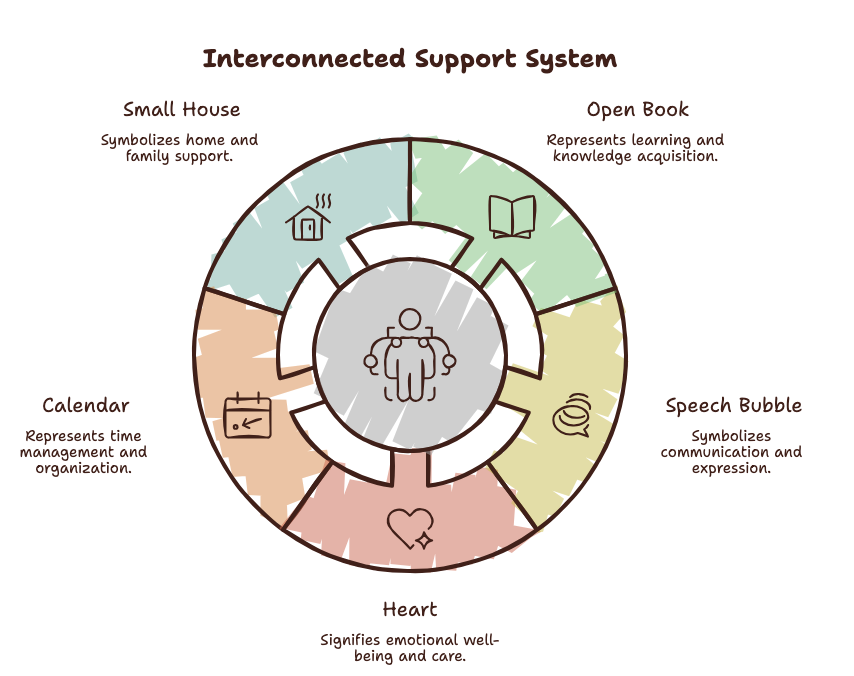
- Academic intervention (the RTI piece)
- Behavioral support, typically organized through PBIS (Positive Behavioral Interventions and Supports), the named framework most districts use for the behavioral tier of MTSS
- Social-emotional learning
- Attendance monitoring and intervention
- Family and community engagement
Where the MTSS Push Came From
MTSS gained significant traction after the passage of the Every Student Succeeds Act (ESSA) in 2015, which pushed schools toward a more comprehensive, whole-child approach to support instead of the narrower academic focus that had defined earlier intervention models. That legislative shift is a big part of why so many districts moved from talking about “RTI” to talking about “MTSS” over the past decade: it wasn’t just a rebrand, it reflected a real change in what schools were expected to address.
MTSS is also more systems-focused. Rather than treating support as something that happens to individual students, MTSS asks schools to examine their own structures, schedules, staffing, and culture, and adjust them to better serve the whole student population.
RTI vs MTSS: The Core Differences
Here’s where the two frameworks actually split, laid out directly:
| RTI | MTSS | |
| Primary focus | Academic skills only | Academic, behavioral, social-emotional, and attendance |
| Scope | Individual student intervention | Individual student needs plus school-wide systems |
| Tiers | Three tiers, academic only | Three tiers, applied across multiple domains |
| Origin | Grew out of special education referral processes | Built on RTI’s tiered model, accelerated nationally after ESSA (2015) |
| Who’s typically involved | Classroom teachers, reading/math interventionists | Teachers, counselors, behavior specialists, administrators, families |
How RTI Fits Inside MTSS
The simplest way to think about the relationship: one is a piece of the other, not a competing system. Most of what a school does under an “RTI process,” universal screening, tiered instruction, progress monitoring, fits naturally inside the broader framework. It just doesn’t stop at academics.
Here’s a way to make that stick: think of the academic-only model as a specialist, laser-focused on one area, the way an eye doctor only checks your vision. The broader model works more like a primary care physician, checking academics, behavior, attendance, and everything else at once, because a problem in one area often shows up as a symptom somewhere else. A struggling reader isn’t always just a reading problem. Sometimes it’s an attendance problem wearing a reading problem’s clothes, and a system that only looks at test scores will miss it every time.
How the Two Actually Work Together
In practice, few schools run RTI in complete isolation from behavior or attendance concerns. A student who’s falling behind academically is often also the student showing up late, disengaging in class, or struggling socially, and treating those as separate, disconnected problems rarely works well.
That’s the practical argument for MTSS: it gives a school one shared framework, one set of data meetings, and one coordinated process for figuring out what a student needs, instead of running parallel academic, behavioral, and attendance systems that never talk to each other. Schools that have already built a strong RTI process aren’t starting over when they move to MTSS. They’re expanding a structure they already understand to cover more of the student.
Why This Distinction Matters for Scheduling
This is where the terminology stops being academic and starts affecting real decisions. A school running a strictly academic model typically only needs to schedule reading and math intervention blocks, staffed by classroom teachers and academic interventionists.
What an MTSS Schedule Has to Handle
A school operating under the fuller framework has a more complex scheduling problem. Flex time or intervention blocks may need to accommodate:
- Academic small groups
- Behavior check-ins or social skills groups
- Attendance follow-up meetings
- Counselor-led sessions
- Family engagement activities happening during the school day
If a school’s scheduling system was only ever built to handle academic groups, forcing an MTSS-level scope into it usually creates exactly the kind of bottlenecks and double-booked rooms discussed in an earlier look at RTI scheduling. Knowing which framework a school is actually operating under, RTI in the narrow sense or MTSS in the broader one, should shape how flexible and how wide-ranging the scheduling system needs to be from the start.
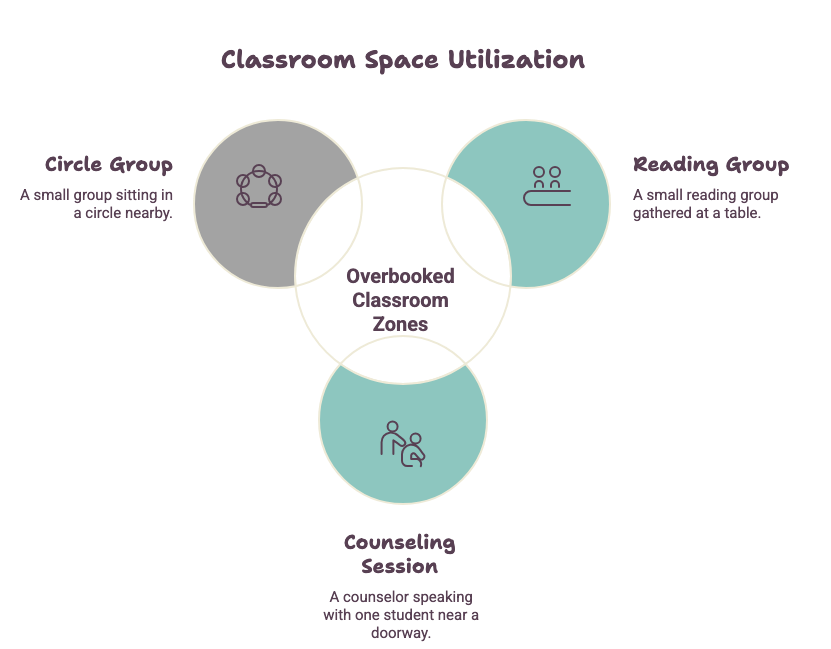
Consider a hypothetical middle school, call it Maple Ridge Middle, that’s used the same 35-minute Tuesday flex block for years to run Tier 2 reading and pre-algebra groups for its 6th and 7th graders. Partway through a school year, the counseling team starts pulling students from that same block for check-ins after a rise in attendance concerns, and the behavior specialist starts running a small social-skills group in the same window because it’s the only slot with open rooms. By November, the reading teacher can’t find an open room twice a week, the counselor is meeting with kids in a hallway, and nobody planned for any of it. Nothing about the framework changed overnight. What changed is that Maple Ridge quietly moved from an RTI-scoped process to an MTSS-scoped one, and the schedule never caught up. (Maple Ridge Middle is a hypothetical example used to illustrate the point, not a real school or documented case study.)
Why the Terminology Varies by State and District
Part of the confusion comes from the fact that neither term is applied consistently everywhere. Some states use “RTI” in their official guidance even when the underlying practice covers behavior and attendance too, essentially running an MTSS model under an RTI label. Other states adopted “MTSS” specifically to signal the broader, whole-child scope and moved away from “RTI” in official documents entirely.
This means two schools using different terms might be doing functionally the same work, and two schools using the same term might have very different scopes in practice. When comparing notes with another school or district, it’s worth asking what the process actually covers rather than assuming the label tells the whole story.
Common Mistakes Schools Make Mixing Up RTI and MTSS
A few patterns show up again and again in schools that treat the two terms as interchangeable:
- Building a schedule that only accounts for academics, then trying to bolt on behavior or attendance support later, once it becomes clear academics alone aren’t the full picture.
- Running separate data meetings for academic, behavioral, and attendance concerns, which slows down decision-making and makes it easy for a student’s full picture to fall through the cracks.
- Assuming MTSS is just RTI with extra paperwork, when in reality it usually requires real buy-in from counselors, behavior staff, and administration, not just classroom teachers.
- Using the terms interchangeably in staff communication, which sounds harmless but often means different staff members have different mental models of what the process actually covers.
None of these mistakes are fatal on their own. But they tend to compound, and a school that’s vague about which framework it’s running usually ends up with a support system that’s harder to schedule, harder to staff, and harder to explain to families. For a closer look at avoiding these kinds of pitfalls day to day, these best practices cover the scheduling side in more depth.
RTI vs MTSS: What Changes Operationally
What actually changes on the ground when a school moves from an academic-only process to a full multi-tiered one:
| What Changes | RTI-Only Setup | After Moving to MTSS |
| Meeting structure | Separate academic data meetings | One shared data meeting covering academics, behavior, and attendance |
| Staff in the room | Teachers and interventionists | Adds counselors, behavior specialists, and often administrators |
| Scheduling load | A handful of academic groups per period | Academic groups plus counseling, behavior, and check-in sessions competing for the same time |
| Family communication | Focused on academic progress reports | Expands to cover behavior, attendance, and social-emotional updates |
| Software or tools needed | Can often run on a simple academic tracker | Usually needs a system flexible enough to schedule multiple support types at once |
Frequently Asked Questions
Is MTSS just a new name for RTI? No. MTSS uses RTI’s tiered structure, but expands it to cover behavior, social-emotional needs, and attendance in addition to academics. RTI is one part of a full MTSS framework, not a rebrand of it.
Do schools have to choose between RTI and MTSS? Not really. Most schools running RTI already have the foundation needed for MTSS: tiered support, progress monitoring, and data-driven decisions. Moving to MTSS is typically an expansion of that existing structure rather than a replacement for it.
Which framework is required by law? Neither term is mandated by federal law directly, though RTI has long been recognized as an allowable approach to identifying learning disabilities under IDEA. States and districts vary in which term they use and how they define implementation requirements, so specific mandates depend on state and local policy. This is general information, not legal advice; check your state education agency’s current guidance for requirements that apply to your district.
Does MTSS mean more work for teachers? It usually means more coordination, not necessarily more work for any one person. The goal of MTSS is to connect academic, behavioral, and attendance support into one system, which can reduce duplicate meetings and disconnected efforts once it’s set up well.
How do I know which framework my school is actually using? Look at what your intervention meetings actually cover. If the conversation is limited to reading and math data, that’s an RTI-scoped process. If behavior, attendance, and social-emotional data show up in the same meetings, the school is functionally running MTSS, whatever term is on the paperwork.
Bringing It All Together
RTI and MTSS aren’t rival systems, and getting the terminology exactly right in casual conversation isn’t the point. What matters is knowing which scope your school is actually operating under, academic-only or the full multi-tiered picture, because that scope determines how support gets scheduled, staffed, and coordinated day to day.
Want to go deeper? Visit rtischedulerhub.com for more guides on RTI, MTSS, and how schools structure intervention time.